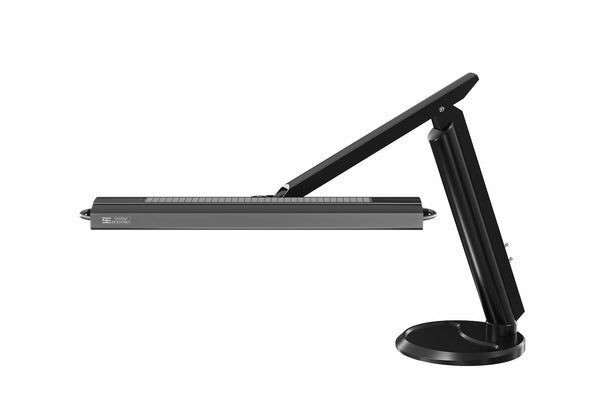
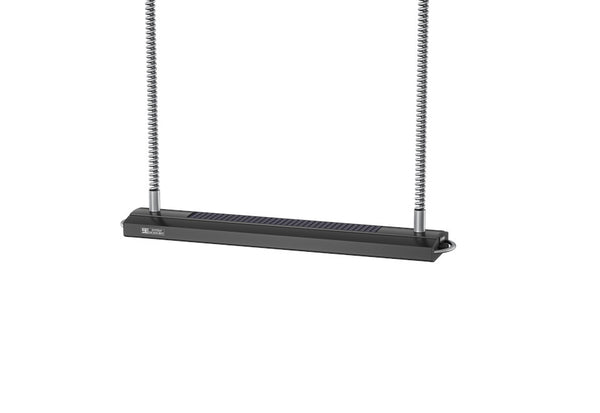
Fine work on the smallest components requires light that reveals every detail.
Why watchmakers need special lighting
Working on a watch movement is one of the most demanding visual tasks in the skilled trades. The tiniest screws, gears, and components must be clearly visible, often for many hours at a time. General room lighting or natural daylight is usually not enough. Only a lamp that the watchmaker can position and adjust themselves provides the necessary brightness without distracting glare and makes the contours of the smallest parts visible.
Requirements for good lighting in watchmaking
Illuminance
At least 1,500 lux, preferably 2,800 to 3,300 lux on the workpiece. For especially fine work, directional supplementary lighting helps highlight individual components.
Light color
Color temperatures above 4,000 kelvin, meaning neutral white, or daylight at 5,400 kelvin or higher provide a clear, high-contrast view of metal surfaces and fine structures.
Glare-free, steady light
Glare and reflections on shiny metal parts tire the eyes and reduce precision. That is why shielded, even light without flicker or stroboscopic effects is essential.
Directional light for contrast
Directional light creates subtle shadows, which reveal the depth and structure of a component. This is essential for assessing surfaces and fits.
Quality criteria at a glance
Strong, broad-area light of at least 1,500 lux, preferably 2,800 to 3,300 lux; directional supplementary lighting when needed; a color temperature above 4,000 kelvin, neutral white or daylight at 5,400 kelvin or higher; glare-free, flicker-free light with no stroboscopic effects. Balanced luminance distribution.
Our recommendations
The following lamps meet these quality criteria and are among the models most often chosen by our watchmaking customers.